1.
Frontier AI today
- What leading models can do, and may be able to do soon
- The shift from training scale to inference compute
- How far agents have reached, and what can go wrong
The first programme built specifically to give legal professionals a working technical understanding of frontier AI safety
Run by ML4Good, the European Union-funded team that has trained 400+ practitioners in technical AI.
We've just completed the inaugural Seminar in the UK. Please follow the link below to express interest for future iterations.

When
5 days
Spring 2027 - Dates to be confirmed
Where
Residential
Venue to be confirmed
Who
For legal professionals
Places are selected for a mix of roles; no technical background is required.
What
20 places
Not for profit pricing - costs cover venue and catering costs. Reduced price attendance options are available.
Vendors currently make claims you can't test. After this seminar, you'll be able to push back on their claims, demand specific safeguards in contracts, and sign off on AI deployments knowing what you are approving.
Disputes involving AI systems often revolve around technical details, such as what the model was trained on, or the environments in which agents were deployed. You'll learn the context that allows you to make informed decisions.
A model card is only useful if you can understand both what it includes and what it leaves out. You'll learn to assess a model card on its technical merits, work out which actor controls each layer of a deployment, spot when a cited evaluation doesn't support the claim attached to it, and how to push back effectively on technical claims.
1.
2.
3.
4.
5.

Programme lead & Headteacher
Elsa is a Legal Officer in AI Safety at the European Commission. Before that, she was an AI Policy Fellow at Ada Lovelace Institute. She studied law before moving into AI governance, completing several programmes in the field including ML4Good, MARS, Orion and Talos. Last summer, she was a summer fellow at GovAI where she explored legal issues surrounding future autonomous/AI-run businesses, specifically legal personhood and corporate law.
She has also been a co-head teacher at ML4Good, teaching at residential bootcamps focused on AI governance and technical AI safety, and a collaborator at the Institute for Law & AI. She spent ten months supervising research projects at the Supervised Program for Alignment Research. She teaches at the European Seminar for Frontier AI and Law, and ML4Good, in a personal capacity, and her views do not represent those of the European Commission.

Co-lead & Curriculum Developer
Katalina is Head of Legal at EquiStamp, an AI evaluation company focused on safety and regulatory compliance. Before that, she spent nearly three years as Responsible AI Lead at VOIS, where she led EU AI Act implementation across ten jurisdictions and sat on the Group AI Board. She has a background in data protection and privacy law, and holds an LLM with Distinction from London Metropolitan University.
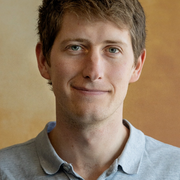
Teacher; Curriculum Developer
Douw is an AI safety research engineer at Equistamp, where he works on agentic evaluations, risk estimation and alignment, contributing to projects for the European Commission's Technical Assistance for AI Safety tender, Redwood Research, METR and the AI Futures Project. He holds a PhD from KU Leuven as a Marie Skłodowska-Curie Fellow, applying unsupervised machine learning and differentiable signal processing to fault detection in rotating machinery, with a dozen peer-reviewed publications and a runner-up finish in the PHM 2023 data challenge. Originally a mechanical engineer from the University of Pretoria, Douw brings a strong grounding in physical systems and responsible data science.
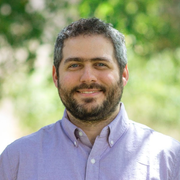
Teacher; Curriculum Developer
Jeff is a technical AI safety researcher and CBAI fellow in Cambridge, MA, working with MIT FutureTech on interpretability. Specifically, he works on models that describe other models' internal states in plain language, building on recent work such as the Natural Language Autoencoder. His research explores training these "activation parsing" models to be more sensitive to a target model's intentions and strategising, and he has shown they can be made small enough to deploy cheaply in oversight and control settings. He came to the field after a decade as a physicist and teacher, including postdoctoral work on the Simons Observatory and faculty posts at Villanova and Colorado College.

Curriculum Developer
Diego is a Senior Software Developer for PEReN, the Center of expertise for digital platform regulation in the French government, and works with the EU AI Office to build the technical infrastructure required for the large-scale evaluation of models. His research has been published at ICML, a top academic conference in AI.


Applications closed.
Express your interest for the futureHow a place is offered
£ (Price TBC)
Not-for-profit pricing. Discounts may be available.
All prices both cover accommodation, meals and all materials for the full 5 days. If cost is a barrier, please apply anyway and let us know. We have limited funds to support attendance for the strongest candidates.
